

Staffordshire County councillors refuse to support national planning delegation changes
By Kerry Ashdown - Local Democracy Reporter 30th Sep 2026
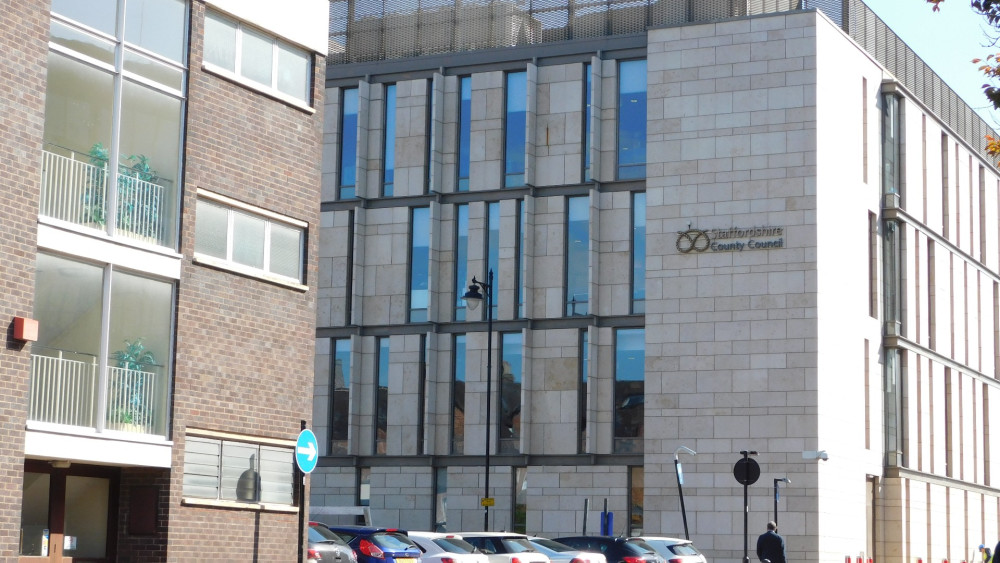

County councillors have refused to support national changes to the way planning application decisions are taken – which will restrict the type of proposals that can be determined by cllrs rather than officers.
From 31 October a new mandatory national scheme of planning delegations will come into force, which will put tighter requirements on the type of planning applications that can be called in for consideration by cllrs.
The majority of planning decisions in Staffordshire are taken by borough and district authorities and delegated to council officers.
But Staffordshire County Council deals with applications relating to minerals and waste, such as proposals covering quarries, as well as local authority maintained schools.
On Tuesday (29 September), members of the county council's Audit and Standards Committee were asked to back proposed changes to the authority's constitution ahead of the national scheme coming into force and recommend them to the next full council meeting.
The changes would include cutting the number of planning committee members from 15 to 13.
But cllrs spoke out against the national scheme at Tuesday's meeting.
It was described as an erosion of local democracy and concerns were raised about how residents' views would be represented.
Download our Nub News App!
- It’s FREE and available now- Breaking news notifications
- Your Town in Your Pocket


Cllr Jeremy Pert called for the authority to write to the Secretary of State to tell the Government "how impossibly wrong this is" and copy the letter to Staffordshire's 12 MPs.
Committee members voted not to endorse the proposed changes, but the final decision will be taken by the full council on Thursday, 8 October.
Cllr Pert said: "I understand this report is about changing the process, I understand equally that we're forced to do this by Government as it's statutory.
"I don't really have a problem with the size of a planning committee, but I do have a problem when local democracy is being eroded by this government.
"As a point of principle I can't support this report.
"Reducing the applications that can be determined by planning committee is fundamentally wrong because communities are a stakeholder – and to have stuff only determined by the officers is fundamentally wrong."
Fellow committee member Cllr Ian Cooper said: "The duty of councillors and elected individuals is to represent their electorate.
"I could not support this in any way, shape or form.

"This establishes a principle that Central Government can basically override local authorities and push delegated powers through officers, bypassing the democratic process of elected people to challenge decisions made by councils.
"There's no way they're going to get my vote on 8 October for this – we should oppose this, object to it and throw it back to the minister in charge.
"We, the people of Staffordshire, decide what we want to do across this county.
"Here we have a government trying to impose on the residents of Staffordshire what they can and cannot do – that is not right in my way of thinking at all."
Cllr Tracey Dougherty highlighted the level of development proposed in the Lichfield area she represents.
She said: "There's currently a feasibility study for Packington for 4,500 homes, to which the constituents have made it perfectly clear they don't want them.
"Despite the fact we obviously don't have a choice here, I don't support it either."
Julie Castree-Denton, Planning Policy and Development Management Team Manger, told the committee: "The risk of not being in line with the guidance is planning decisions could be quashed, or there is the risk of judicial review if we haven't changed our delegation scheme to meet the national scheme of delegation.

"The major proposals that affect communities do come to planning committee.
"Under our current scheme of delegation, if we receive more than four representations from locals it comes to planning committee.
"Under the new gateway test there is no trigger point.
"If one person makes a valid material objection on material planning grounds, it would go to planning committee.
"Also, if a valid objection is received by the local member or the parish council, it will go to planning committee.
"We already have in our scheme of delegation that if it's a substantial new site or a significant extension to a quarry, even if we didn't get any objections from the parish council, members of the public or statutory consultees, that application would still go to planning committee.
"The guidance that has been given to local authorities on implementing the national scheme of delegation states that the committee should focus on the key proposals that matter to an area, enabling minor or technical decisions to be made by planning officers.
"That's what we're suggesting – major applications would still come to the planning committee."

Chris Ebberley, Head of Member and Democratic Services, said: "The risks to not following this legislation would be severe.
"The constitution has to follow the legislation.
"If you choose not to adopt the recommendations, we will need to go away to consider that, take separate legal advice and bring that back.
"That would need to be by 31 October, so we are up against it."
Download our Nub News App:
- It’s FREE and available now
- Breaking news notifications
- Your Town in Your Pocket
Share: